
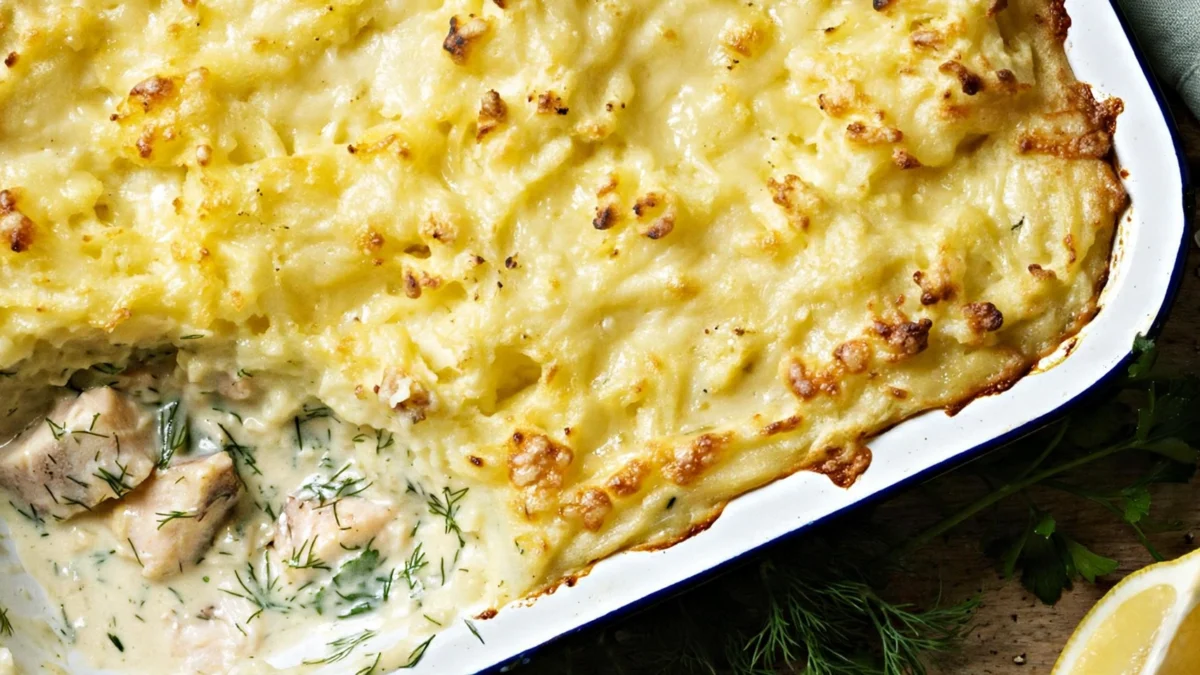
This fish pie Gordon Ramsay recipe never pre-cooks the fish. Salmon, cod, scallops and prawns go into the dish raw, a vermouth sauce is poured over, and the mash goes on top before the whole thing bakes for 30 minutes. In the copies I compared, that is 780g of raw fish and shellfish, 4 tablespoons of Noilly Prat, 250ml of stock, 200ml of milk and 4 tablespoons of double cream. GoodtoKnow’s page headed “Gordon Ramsay’s fish pie” is a different recipe: it poaches 800g of fish in 250ml of cream and 250ml of milk first, then bakes for 25 to 35 minutes. Here the mash is 750g of Desirée potato with butter, 2 egg yolks and Cheddar. The pie serves 4 to 6 and costs about £3.87 a portion at 6.
I have cooked this pie at home 6 times, and it went down well with everyone who tried it. This page gives you the full recipe with times and visual cues, the reason the fish goes in raw, a costed shopping list, allergens, and exact fridge and freezer limits.
| Serves | 4 to 6 |
|---|---|
| Dish | Shallow 2-litre pie dish, on a baking tray |
| Prep | 20 minutes |
| Cook | 65 minutes |
| Stand | 10 minutes |
| Total | 1 hour 35 minutes |
| Cost per portion | about £3.87 at 6 portions (£5.81 at 4) |
| Difficulty | Medium |
Where this recipe comes from
This is based on Gordon Ramsay’s Fish Pie in Gordon Ramsay’s Ultimate Cookery Course (Hodder & Stoughton, 2012), published in the US as Gordon Ramsay’s Home Cooking (2013). It has also been reprinted by Gordon Ramsay’s own website, which credits the Ultimate Cookery Course, and matching copies appear on Yummly and Recipe Lane. I follow his approach:
- Salmon, cod or haddock, queen scallops and king prawns scattered in the dish raw and baked in the sauce, with no poaching first.
- Shallots softened with thyme, then Noilly Prat (or dry vermouth) and optional Pernod cooked until “reduced right down”.
- A flour-thickened sauce of stock reduced by a third, then milk, double cream and parsley.
- A topping of 750g of Desirée potato mashed with 75g of butter, 50ml of hot milk and 2 egg yolks, finished with 75g of grated Cheddar.
- 10 minutes at 200°C, then 20 minutes at 180°C in a shallow 2-litre dish, and a 10-minute stand.
The timings for boiling the potatoes, assembling the pie and the milk simmer, the cost, the troubleshooting and the storage advice are my own additions for UK home cooks.
Two things to know about the copies. Gordon Ramsay’s page says 4 to 6 servings in its text, but its structured data says 4, and the Yummly copy defaults to 5, so I use 4 to 6. Other pages headed “Gordon Ramsay fish pie” describe different recipes (more on that below), so I have only used copies that match the official ingredient list.
How I checked this page
- Cooked at home: I’ve made this pie 6 times in my own kitchen.
- The recipe: I compared ingredients, quantities, method order, oven temperatures, bake times and servings across Gordon Ramsay’s official page, the Yummly copy and the Recipe Lane copy. All three share the same ingredient list and quantities. The official page and Recipe Lane also share the method. I could only see the ingredient index for the Home Cooking printing on Eat Your Books, not its quantities, and I have not read the book itself.
- The timings: I added up each step. The sauce steps (5 minutes, 4 to 5 minutes, about 1 minute, about 5 minutes) and the bake (10 plus 20 minutes plus a 10-minute stand) come from the copies. Boiling the potatoes, assembling and the milk simmer (“a few minutes”) are my estimates.
- The costs: Priced from Tesco online listings in November 2026. Where two Tesco pages disagreed I used the higher price. I cross-checked scallops and prawns against the Trolley price tracker for Sainsbury’s. Prices change, so treat them as a guide.
- The storage advice: It follows Food Standards Agency (FSA) and NHS guidance on cooling, fridge life, freezing and reheating. Where they differ I use the more cautious figure.
- The nutrition: A rough estimate built from Tesco label values, compared with two published figures.
Why the fish goes in raw, and why the vermouth is reduced
Raw fish. The official page says to “bake it from raw”, and its introduction credits the vermouth, rather than the stock, for the sauce’s flavour. The case for cooking the fish once is protein behaviour. The Culinary Pro’s guide to cooking proteins says fish and shellfish proteins set at a lower temperature than meat, around 50 to 55°C, and start to lose moisture and dry out at about 60°C. A pie that poaches the fish and then bakes it for another 20 to 30 minutes gives the fish two rounds of heat. Here the fish meets heat once, gently, inside the sauce. Recipe Lane makes the same point about double cooking, but that is a cook’s opinion, not a measurement.
Reduced vermouth. The copies cook the Noilly Prat and Pernod “until reduced right down” after the shallots, a step that takes 4 to 5 minutes. I haven’t found a source that explains the chemistry beyond Ramsay’s own comment about flavour, so I follow the step as written and judge it by the pan: the pan should look nearly dry and glossy before the flour goes in.
The alcohol. It does not all cook out. USDA retention figures, reported by Idaho State University, show about 40% remaining after 15 minutes of baking or simmering with the alcohol stirred in and 35% after 30 minutes. This pie reduces its vermouth first and then bakes for 30 minutes, so less will remain, but I can’t give a figure. Treat it as containing alcohol.
The mash. The copies stir the egg yolks in after the mash has “cooled slightly”. Egg yolk starts to thicken at about 65°C and sets firm between 70 and 77°C, according to the Wikibooks cookery section on eggs, so yolks stirred into piping-hot mash can start to cook into specks. Tesco describes Desirée as a red-skinned, waxy and firm potato that is best for smooth, creamy mash.
The stand. The copies give a 10-minute stand before serving. A pie this full of sauce is easier to serve once it has stopped bubbling, and the stand gives the mash time to firm up.
Fish pie Gordon Ramsay recipe ingredients
For the sauce
- 2 large shallots (or 1 onion), peeled and chopped
- 2 tbsp olive oil
- 40g butter
- 1 large thyme sprig, leaves only
- 4 tbsp Noilly Prat or dry vermouth (60ml)
- 2 tsp Pernod (optional)
- 4 tbsp plain flour
- 250ml fish, chicken or vegetable stock (1 stock cube in 250ml boiling water)
- 200ml milk
- 4 tbsp double cream (60ml)
- 3 tbsp chopped fresh parsley
For the fish
- 180g skinless salmon fillet
- 250g skinless cod or haddock fillet
- 200g queen scallops
- 150g raw king prawns
- 1 tbsp lemon juice
- Sea salt and freshly ground black pepper
For the mash topping
- 750g Desirée potatoes, peeled
- 75g butter, cubed
- 50ml hot milk
- 2 large egg yolks
- 75g medium Cheddar, grated
You will also need: a shallow 2-litre pie dish, a baking tray, and a potato ricer if you have one.
Method
1. Heat the oven and start the potatoes.
Heat the oven to 200°C (180°C fan, gas 6) and grease the pie dish. Cut the potatoes into chunks, put them in salted water, bring to the boil and cook until tender. The copies give no time, so allow about 20 minutes and test with a knife.
2. Start the sauce while the potatoes boil.
Begin about 10 minutes after the potatoes go on. Cook the shallots in the oil and butter with the thyme for about 5 minutes until soft. Add the Noilly Prat and the Pernod, if using, and cook for 4 to 5 minutes until reduced right down. Stir in the flour and cook for about a minute.
3. Build the sauce.
Heat the stock and add it gradually, stirring until smooth. Boil for about 5 minutes until reduced by a third. Stir in the milk, turn the heat down and simmer for about 3 minutes (the copies say “a few minutes”). Season well, then stir in the cream and parsley. The sauce should look thick and glossy and coat the back of a spoon.
4. Mash the potatoes.
Drain well, then push through a ricer or mash until smooth. Beat in the butter and hot milk. Let the mash cool slightly, then stir in the yolks and season. This should take about 10 minutes from draining, and the sauce should finish at the same time.
5. Assemble.
Cut the salmon and cod into bite-sized chunks and scatter them in the dish with the scallops and prawns. Sprinkle over the lemon juice and a little seasoning. Stand the dish on a baking tray. Pour the hot sauce over and mix gently with a fork. Spread the mash on top, fluff the surface with a fork and scatter over the Cheddar. Put the pie in the oven straight away.
6. Bake.
Bake for 10 minutes at 200°C (180°C fan, gas 6). Turn the oven down to 180°C (160°C fan, gas 4) and bake for 20 minutes more, turning the dish if the top browns unevenly. The top should be golden, with the filling bubbling at the edges.
7. Stand and check.
Let the pie stand for 10 minutes. Before serving, check the centre is steaming hot and the fish is opaque and flakes easily.
Allergens and swaps
Allergens:
- Fish. Salmon and cod or haddock, plus any fish stock cube.
- Crustaceans. King prawns. Tesco’s raw king prawn label also says “may contain fish and molluscs”.
- Molluscs. Scallops.
- Milk. Butter, milk, cream and Cheddar. One UK merchant also lists milk on Noilly Prat Original Dry, so check your bottle.
- Eggs. The yolks.
- Cereals containing gluten. Wheat in the plain flour.
- Celery. Knorr fish stock cubes list celery and fish. One retailer listing also says “contains crustaceans” and another says “may contain”.
- Sulphites. Noilly Prat carries sulphur dioxide and sulphites on UK merchant listings.
I could not find an allergen statement for Pernod itself, so check the label. Brand labels vary. I have not tested a gluten-free flour, so I can’t offer a gluten-free version.
Swaps:
- Fish: The source says cod or haddock. An Eat Your Books note on the Home Cooking entry says haddock can replace cod.
- Vermouth: The source says “Noilly Prat or dry vermouth”. Recipe Lane says any dry vermouth works and that plain white wine will taste less deep. I have not cooked it with wine.
- Pernod: Optional in the source.
- Shallots: 1 onion can replace the 2 large shallots, as the source allows.
- Stock: Fish, chicken or vegetable, as the source allows. I priced a fish stock cube.
- Scallops: The recipe asks for queen scallops. Tesco did not list them when I checked, so I priced its raw Patagonian scallops, which are a different species.
How the timings add up
| Step | Time |
|---|---|
| Prep: peel and cut the potatoes, chop the shallots, cut the fish | 20 min |
| Boil the potatoes (oven heats alongside; the sauce starts about 10 minutes in) | 20 min |
| Drain, mash, cool slightly, add yolks (the 20-minute sauce finishes alongside) | 10 min |
| Assemble | 5 min |
| Bake: 10 minutes at 200°C, then 20 minutes at 180°C | 30 min |
| Stand | 10 min |
| Total | 95 min (1 hr 35 min) |
The sauce takes about 20 minutes (5, then 5, then 1, then 5, then 3, then 1 for the cream and parsley) and runs alongside the potatoes, so it adds no extra time. Cook time is 65 minutes (everything except prep and the stand). The copies state the sauce steps, the bake and the stand. The potato boil, the assembly and the milk simmer are my estimates. For comparison, the official page’s structured data says 1 hour and Recipe Lane says about 45 minutes, and neither counts boiling and mashing the potatoes.
What does it cost?
Based on Tesco’s online listings in November 2026:
| Ingredient | Tesco price | Amount used | Cost |
|---|---|---|---|
| Tesco 6 Boneless Salmon Fillets, 780g | £14.50 | 180g | £3.35 |
| Tesco Skinless and Boneless Cod Fillet Pieces, 250g | £5.25 | 250g | £5.25 |
| Tesco Raw Scallops, 150g | £5.00 | 200g | £6.67 |
| Tesco Raw King Prawns, 165g | £3.50 | 150g | £3.18 |
| Tesco Desiree Potatoes, 1.75kg | £1.50 | 750g | £0.64 |
| Tesco British Salted Block Butter, 250g | £1.99 | 115g (40g + 75g) | £0.92 |
| Tesco Medium Cheddar, 400g | £3.25 | 75g | £0.61 |
| Tesco British Double Cream, 300ml | £1.70 | 60ml | £0.34 |
| Tesco British Whole Milk, 2.272L | £1.75 | 250ml (200ml + 50ml) | £0.19 |
| Noilly Prat Dry, 75cl | £13.75 | 60ml | £1.10 |
| Tesco Shallots, 400g | £1.35 | about 100g (my assumption) | £0.34 |
| Tesco Plain Flour, 1.5kg | £0.80 | about 40g (my assumption) | £0.02 |
| Tesco Extra Virgin Olive Oil, 500ml | £6.00 | 30ml (2 tbsp) | £0.36 |
| Knorr Fish Stock Cubes, 8 x 10g | £2.00 | 1 cube (£2.00 ÷ 8) | £0.25 |
| Total | £23.22 |
£23.22 ÷ 6 gives about £3.87 a portion, or £5.81 a portion if you serve 4. Thyme, parsley, lemon juice, Pernod, the egg yolks and seasoning aren’t priced.
Tesco pages disagreed in places. The salmon was £14.50 on its product page and £13.50 in a category listing, the cod pieces £5.25 against £4.95, the cream £1.70 against £1.60 and the milk £1.75 against £1.65. I used the higher figure each time. The Desirée pack was showing as out of stock. At the till you buy whole packs, so 200g of scallops means two 150g packs at £10.00 against the £6.67 priced here, and the vermouth is a £13.75 bottle of which about £1.10 is used. For comparison, Trolley lists Sainsbury’s 200g raw Patagonian scallops at £6.00 and its 165g raw king prawns at £2.99. I could not find current Aldi UK shelf prices. The scallops and prawns are about 42% of the priced total (£9.85 of £23.22). There’s no honest budget tip here: the source uses them, and I haven’t tested the recipe without.
Tips for the best pie
- Defrost fully and pat dry. Tesco’s labels say its scallops need a minimum of 12 hours in the fridge, its cod pieces 10 hours and frozen raw prawns 8 hours, and none of them is suitable for cooking from frozen. Use defrosted scallops within 24 hours.
- Cut the fish into similar bite-sized chunks. The copies say bite-sized, and even pieces cook at the same pace.
- Reduce the vermouth until the pan looks nearly dry. The copies say “reduced right down”, and 4 to 5 minutes is the time they give.
- Cool the mash slightly before the yolks go in. Yolks start to thicken at about 65°C.
- Bake on a tray. The official method puts the dish on a baking sheet, and a pie this full will catch drips.
- Assemble last and bake straight away. The copies put the pie in the oven immediately, and the FSA advises keeping raw fish on the bottom shelf of the fridge until you need it.
If it goes wrong
- Watery filling. The usual cause reported by UK cooks is fish that was not fully defrosted and drained, or a sauce that was too thin. Defrost in the fridge, pat the fish dry, and reduce the stock by a third as the method says.
- Dry or rubbery fish and scallops. Fish proteins dry out from about 60°C, so extra oven time hurts. Cut the pieces evenly, keep to 10 plus 20 minutes, and stop when the centre is steaming hot and the fish flakes.
- Mash with scrambled specks, or a topping that sinks. Yolks went into hot mash, or the mash was too soft. Cool it slightly first, drain thoroughly, and use only the 50ml of hot milk. Taming Twins notes that mash for fish pie needs to be left a little thicker than usual.
- Lumpy sauce. The stock went in too fast. Add it gradually while stirring until smooth, as the copies say.
- Flat-tasting sauce. The vermouth was not reduced enough, or the sauce was under-seasoned. Cook the vermouth until almost dry, and season after the milk goes in.
Make ahead, store, freeze and reheat
- Cooling: The FSA says to cool leftovers and get them into the fridge or freezer within 1 to 2 hours. Splitting them into smaller portions helps them cool faster.
- Make ahead: The copies give no make-ahead advice, and I found no FSA or NHS guidance on holding an assembled pie of raw fish. Cook and bake it the same day, and treat any leftovers as cooked food.
- Fridge: Eat within 2 days (48 hours). The FSA, NHS Inform and NHS Forth Valley all give 2 days.
- Freezer: Freeze cooled portions for no more than 2 months, which is the NHS Forth Valley limit. Other sources say 3 months, and I use the more cautious one. Defrost in the fridge and use within 24 hours of defrosting.
- Reheat: Reheat once only, until steaming hot all the way through. NHS Inform says to reach 75°C. The FSA says food that has been frozen again once cooked can only be reheated once. Recipe Lane suggests covering it with foil at 160°C for 15 to 20 minutes, but that is one source, and a thick portion needs checking in the centre.
What to serve with it
The pie already has its mash, so it needs only something green. GoodtoKnow’s own fish pie suggests peas or green beans, and Neven Maguire serves his with buttered peas. I’d go with peas.
Nutrition (estimate)
About 593 kcal per portion at 6 servings (about 890 at 4), from a total of about 3,558 kcal. That’s built from Tesco label values:
| Ingredient | kcal |
|---|---|
| Salmon 180g (209 kcal per 100g) | 376 |
| Cod 250g (75 kcal per 100g) | 188 |
| Scallops 200g (156 kcal per 150g pack) | 208 |
| King prawns 150g (51 kcal per 83g) | 92 |
| Potatoes 750g (80 kcal per 100g) | 600 |
| Butter 115g (745 kcal per 100g) | 857 |
| Cheddar 75g (415 kcal per 100g) | 311 |
| Double cream 60ml (140 kcal per 30ml) | 280 |
| Whole milk 250ml (132 kcal per 200ml) | 165 |
| Noilly Prat 60ml (113 kcal per 100ml) | 68 |
| Shallots about 100g (24 kcal per 100g) | 24 |
| Plain flour about 40g (357 kcal per 100g) | 143 |
| Olive oil 2 tbsp (123 kcal per tbsp) | 246 |
| Total | 3,558 |
The label values come from Tesco’s salmon, cod, scallop, prawn, potato, butter, Cheddar, cream, milk, Noilly Prat, shallot, flour and olive oil pages. The salmon label is for skin-on fillets, the scallop label is for cooked weight, the potato label is for boiled potato, and I counted all the vermouth even though it reduces. The egg yolks, lemon juice, parsley, thyme, stock cube and Pernod aren’t counted. As a check, the Yummly copy shows 790 kcal per portion at 5 servings (about 3,950 in total, so mine is about 10% lower) and Recipe Lane gives 580 kcal for 4 to 6 servings.
Related recipe: Gordon Ramsay cottage pie recipe
Gordon Ramsay Fish Pie
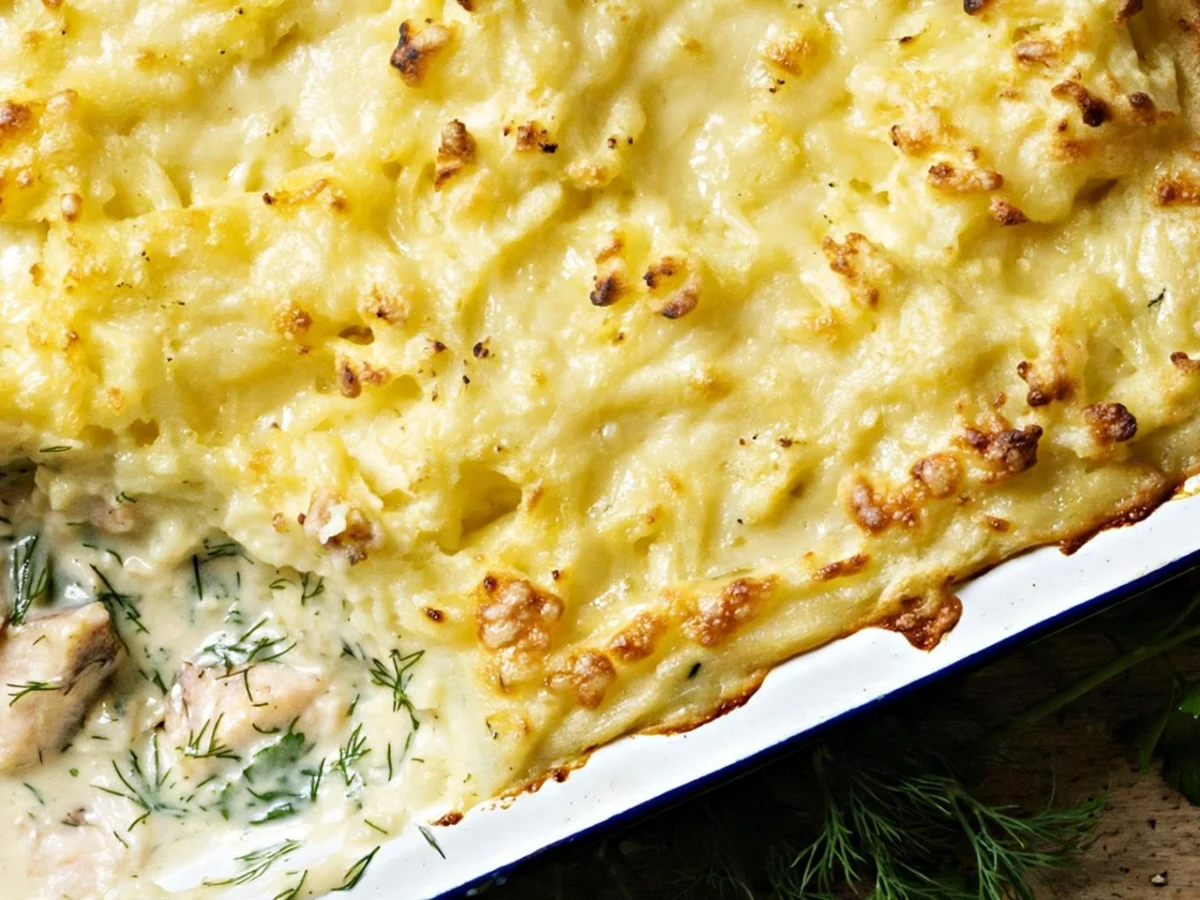
Raw salmon, cod, scallops and king prawns baked in a Noilly Prat cream sauce under a cheesy egg-yolk mash, based on Gordon Ramsay's recipe in Gordon Ramsay's Ultimate Cookery Course.
Ingredients
Tap to tick off- For the sauce
- For the fish
- For the mash topping
Method
-
Heat the oven and start the potatoes
Heat the oven to 200°C (180°C fan, gas 6) and grease a shallow 2-litre pie dish. Cut the potatoes into chunks and boil in salted water until tender, about 20 minutes.
-
Start the sauce while the potatoes boil
About 10 minutes after the potatoes go on, cook the shallots in the oil and butter with the thyme for about 5 minutes until soft. Add the Noilly Prat and Pernod, if using, and cook for 4 to 5 minutes until reduced right down. Stir in the flour and cook for about 1 minute.
-
Build the sauce
Heat the stock and add it gradually, stirring until smooth. Boil for about 5 minutes until reduced by a third. Stir in the milk, turn the heat down and simmer for about 3 minutes. Season well, then stir in the cream and parsley.
-
Mash the potatoes
Drain the potatoes, then rice or mash until smooth. Beat in the butter and hot milk, let the mash cool slightly, then stir in the yolks and season (about 10 minutes from draining).
-
Assemble
Cut the salmon and cod into bite-sized chunks and scatter in the dish with the scallops and prawns. Sprinkle with the lemon juice and seasoning and stand the dish on a baking tray. Pour over the hot sauce and mix gently with a fork. Spread the mash on top, fluff with a fork and scatter over the Cheddar. Put in the oven straight away.
-
Bake
Bake for 10 minutes at 200°C (180°C fan, gas 6), then turn the oven down to 180°C (160°C fan, gas 4) and bake for 20 minutes more, turning the dish if the top browns unevenly.
-
Stand and check
Let the pie stand for 10 minutes. Check the centre is steaming hot and the fish is opaque and flakes easily before serving.
Recipe notes
Contains fish, crustaceans, molluscs, milk, eggs, wheat (gluten), celery (in many fish stock cubes) and sulphites (in vermouth). Check your brands, including Pernod. Contains alcohol. Not gluten free. Calories are an estimate and don't include the egg yolks, lemon juice, parsley, thyme, stock cube or Pernod. Defrost frozen fish fully and pat dry. Chill leftovers within 1 to 2 hours, eat within 2 days, freeze for no more than 2 months, and reheat once only until steaming hot throughout.